
Beyond the Shot: What Makes a Photographer Want More
A finished photograph can feel strangely unfinished.
The shutter clicks, the file saves, the moment is caught. Yet the photographer often feels a pull that the image alone cannot satisfy. One good frame leads to another question. One strong portrait opens a new way of seeing a face. One quiet landscape makes the next morning feel worth chasing.
That pull is the world beyond the shot.
Photography looks simple from the outside. Point the camera, press the button, keep the best result. But anyone who stays with it for more than a season learns that the photograph is only part of the reward. The deeper attraction comes from attention, patience, memory, risk, and the chance to see ordinary things with fresh eyes.

The first shot is rarely the real reason
Most people start photography because they want to keep something.
A child’s expression. A place they may never visit again. A bird on a fence. A storm rolling over the horizon. At first, the camera feels like a tool for saving proof. This happened. I was here. This mattered.
Then something changes.
The photographer starts to notice that the act of looking becomes as meaningful as the result. Waiting for the light changes the experience of the place. Finding a frame changes the way space feels. Watching a person relax in front of the lens reveals a small human truth that might have passed unnoticed.
The camera becomes less like a box that stores pictures and more like a reason to pay attention.
A person walking through a city without a camera may pass a cracked wall, a shaft of light, a red umbrella, and a tired dog sleeping near a doorway. A photographer sees possible order inside that rush. Not because everything needs to become a picture, but because photography trains the eye to ask, what is happening here that I might miss?
That question is addictive in the best way.
Curiosity keeps the camera in hand
Skill matters. Gear can matter. Timing often matters. But curiosity is the force that keeps a photographer returning to the world.
Curiosity asks simple questions:
What happens if I move closer?
What if I wait five more minutes?
What is outside the obvious frame?
What does this scene feel like from the ground?
What is the light doing behind me?
These questions turn a quick snapshot into a search. Not a tense search, but an alert one. The photographer is not only trying to capture the subject. They are trying to understand it.
A street corner is not just a street corner when the rain starts. A kitchen table is not just a table when late afternoon light falls across a half-peeled orange. A familiar face is not just familiar when silence settles and the expression shifts.
Curiosity also protects photography from becoming routine. Without it, even beautiful subjects can feel flat. With it, simple subjects can become memorable.
A photographer who remains curious can return to the same field, the same shoreline, or the same window for years. The location may stay still, but the seeing changes.
Light is never just light
Photographers talk about light so often that the word can start to sound technical. Soft light. Hard light. Backlight. Low light. Golden hour. Blue hour.
But light is more than a condition. It is the emotional weather of a photograph.
Morning light can make a street feel forgiving. Noon light can make a wall harsh and honest. Window light can make a portrait feel private. Flash can make a gesture feel sharp, strange, or theatrical. A cloudy sky can flatten a scene or give it calm.
The hunger for more often comes from the fact that light never repeats itself exactly. Return to the same place tomorrow, and the scene may carry a different mood. The tree is the same. The building is the same. The person may even be the same. But the photograph is not.
This is one of the quiet lessons of photography: control is limited, and that is part of the pleasure.
A photographer can plan the lens, the settings, the location, and the subject. They can check the weather and arrive early. Still, the final image depends on conditions that do not fully answer to human plans. A cloud moves. A person turns. A reflection appears. A shadow crosses the frame.
The photographer learns to prepare, then respond.

The frame creates a different way to think
A camera does not show everything. That is its power.
Every photograph is an act of selection. Something enters the frame. Something stays outside. A photographer decides where the edge goes, what to include, what to cut, and what relationship the parts should have.
This can sound limiting, but it often creates freedom. The world is too full to hold all at once. The frame gives the eye a place to rest.
Through framing, a photographer learns to simplify without making the world feel small. A busy market becomes a hand passing fruit. A mountain range becomes one ridge line in fog. A parade becomes a child watching from the curb. The photograph may show less, but it can suggest more.
This is one reason photographers keep going after they have already made technically good images. Technical success answers only one question: is the picture well made? The deeper question is harder: does the picture say what I felt, saw, or began to understand?
That question can take a lifetime.
The missed shot matters too
Every photographer knows the ache of the missed shot.
The bird flew before the focus locked. The smile vanished. The light faded while the lens cap was still on. The settings were wrong. The memory card was full. The best frame existed for one second, then disappeared.
At first, missed shots feel like failure. Later, they become teachers.
They teach readiness. They teach humility. They teach the difference between watching and merely wanting. They remind the photographer that the world does not perform on command.
Some missed shots also become private photographs. They never appear on a screen or a wall, but they stay in memory with unusual force. The photographer can still describe them years later: the color of the sky, the angle of the face, the bird’s wing, the way steam rose from the pavement after rain.
The image was not captured, but the seeing was real.
That matters because photography is not only about ownership. It is also about presence. The desire to make the picture sharpens attention, even when no picture remains.
Gear can inspire, but it cannot replace hunger
Cameras are enjoyable objects. Lenses have different personalities. A new body can make low light easier. A longer lens can bring distant subjects into reach. A small camera can make daily shooting feel natural.
There is nothing wrong with loving gear. Photographers often enjoy the feel of dials, the sound of a shutter, the balance of a lens, and the small rituals of packing a bag. Tools shape experience.
But gear alone rarely creates lasting desire.
A camera can remove barriers, but it cannot supply a reason to look. The most expensive setup will feel dull in bored hands. A modest camera can produce meaningful work when the person using it has patience, taste, and a reason to care.
The better question is not always, what camera should I buy next? Sometimes it is:
What subject keeps calling me back?
What do I want to understand better?
What kind of light makes me stop walking?
What have I avoided photographing because it feels difficult?
What would I shoot if nobody else saw the result?
These questions often lead farther than a shopping cart.
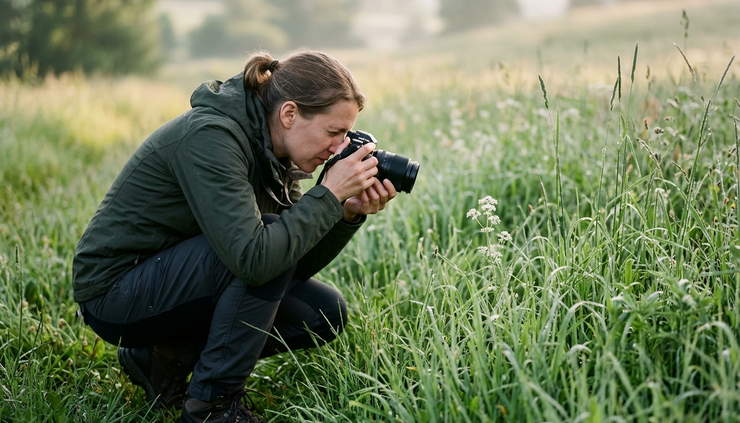
The need for more is really a need for growth
Wanting more does not only mean wanting more images.
It can mean wanting more honesty in the work. More control over timing. More comfort with people. More courage in difficult light. More patience with slow projects. More willingness to delete the safe frame and keep the strange one.
Photography reveals progress in a clear but sometimes painful way. Old images show old habits. Crooked compositions. Heavy edits. Subjects placed too neatly in the center. Fear of getting close. Fear of backing up. Fear of waiting.
That can be uncomfortable, but it is also useful. Few art forms leave such a visible trail of how a person used to see.
Growth often arrives through small changes:
Shooting fewer frames with more intent
Returning to the same subject
Studying contact sheets or full image sets
Printing photographs
Sharing work with trusted people
The photographer slows down and chooses more carefully.
Repetition reveals details that a single visit misses.
The best frame becomes easier to recognize after seeing the almost-good ones.
Weaknesses and strengths become clearer on paper.
Honest feedback helps separate attachment from impact.
The desire for more can become unhealthy if it turns into constant dissatisfaction. But when handled well, it becomes fuel. The photographer learns to enjoy the gap between the image made and the image imagined.
That gap is where practice lives.
Photography offers a reason to return
Many of the best photographs are not made by passing through once. They come from returning.
Return to a neighborhood until the patterns become visible. Return to a family member’s face through years of change. Return to a coastline in different weather. Return to a project after the first excitement fades.
The first visit often gives the obvious photograph. The second may give a better one. The tenth may give the image that carries real feeling.
Returning builds trust with subjects, places, and the photographer’s own instincts. It also changes the role of the camera. The act becomes less like taking and more like listening.
This matters especially in documentary, portrait, nature, and personal work. A single dramatic image may catch attention, but a body of work can hold complexity. It can show change, contradiction, humor, tenderness, and time.
A photographer who wants more may not be chasing novelty. They may be searching for depth.
The photographer is changed by the looking
The most lasting effect of photography may not be the archive. It may be the altered eye.
After enough time with a camera, ordinary life begins to look layered. Reflections in store windows become small stages. Family gatherings reveal gestures that repeat across generations. Weather becomes character. Silence becomes visible. Even clutter can start to show rhythm.
This does not mean every moment should be photographed. In fact, experienced photographers often learn when to put the camera down. Some moments ask to be lived without a lens between the eye and the world.
But the habit of seeing remains.
Photography teaches a person to notice edges, pauses, contrasts, and small acts of grace. It gives shape to attention. It makes the world feel less blank.
That may be the true answer to what makes a photographer want more. The photograph is a result, but the practice changes the person making it.

The world beyond the shot is where the work begins
A photograph freezes a fraction of a second, but the desire behind it is much larger. It comes from curiosity, memory, light, failure, patience, and growth. It comes from the hope that looking harder might reveal something true.
The world beyond the shot is not separate from photography. It is the reason photography keeps calling.
A good image gives satisfaction. A meaningful practice gives something deeper: a way to move through the world awake, alert, and ready to be surprised.



Comments